
Should a goalie drink the same way as the winger stepping off a hard 45-second turn on the ice? Their bodies lose fluid on different schedules and for different reasons, and a single team hydration plan tends to serve one of them well and leave the other short. The gear alone is enough to split the two into separate problems, and the cold rink hides both.
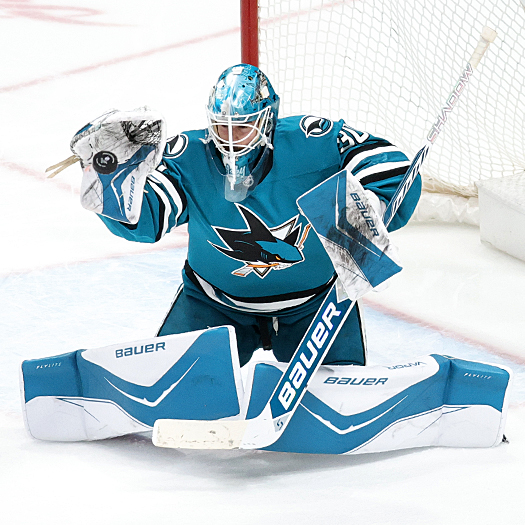
Sharks goalie Yaroslav Askarov makes a glove save during second period action – Photo by Jack Lima
The Cold-Rink Illusion
Ice hockey looks like the last place a player would sweat heavily, and that appearance is the trap. Elite players lose an average of 3.2 liters of fluid across a single game, with measured sweat rates around 2 liters per hour at the professional level. The cold air over the ice suppresses the thirst signal, so a player who is well into a deficit still does not feel like drinking. That blunted thirst is why hockey produces so much voluntary dehydration, where players simply drink less than they lose without noticing.

The problem starts before the puck drops. Research has found that more than 70% of hockey players arrive at the rink already mildly dehydrated, and about a third lose more than 2% of body mass during a game even with bottles on the bench. A cold environment does not lower the fluid cost of the sport. It only removes the warning that usually tells a player to drink.
The Goalie’s Gear Problem
A goalie carries the heaviest load of equipment on the ice, and that equipment is the core of the goalie’s hydration challenge. Chest protector, leg pads, mask, and a heavy sweater trap body heat that has nowhere to go. The goalie skates a fraction of the distance a forward covers, so the sweat is driven less by cardio work and more by heat that the gear holds against the body. Core temperature rises, sweat follows, and the cooling never comes because the pads block it.
This changes what dehydration does to a goalie. The position is built on reaction and stillness instead of repeated sprints, and the equipment turns the crease into a warm, enclosed space for a full 60 minutes. A goalie can finish a low-shot game feeling like they barely moved and still be down more than a liter, because the heat load kept the sweat running the whole time.
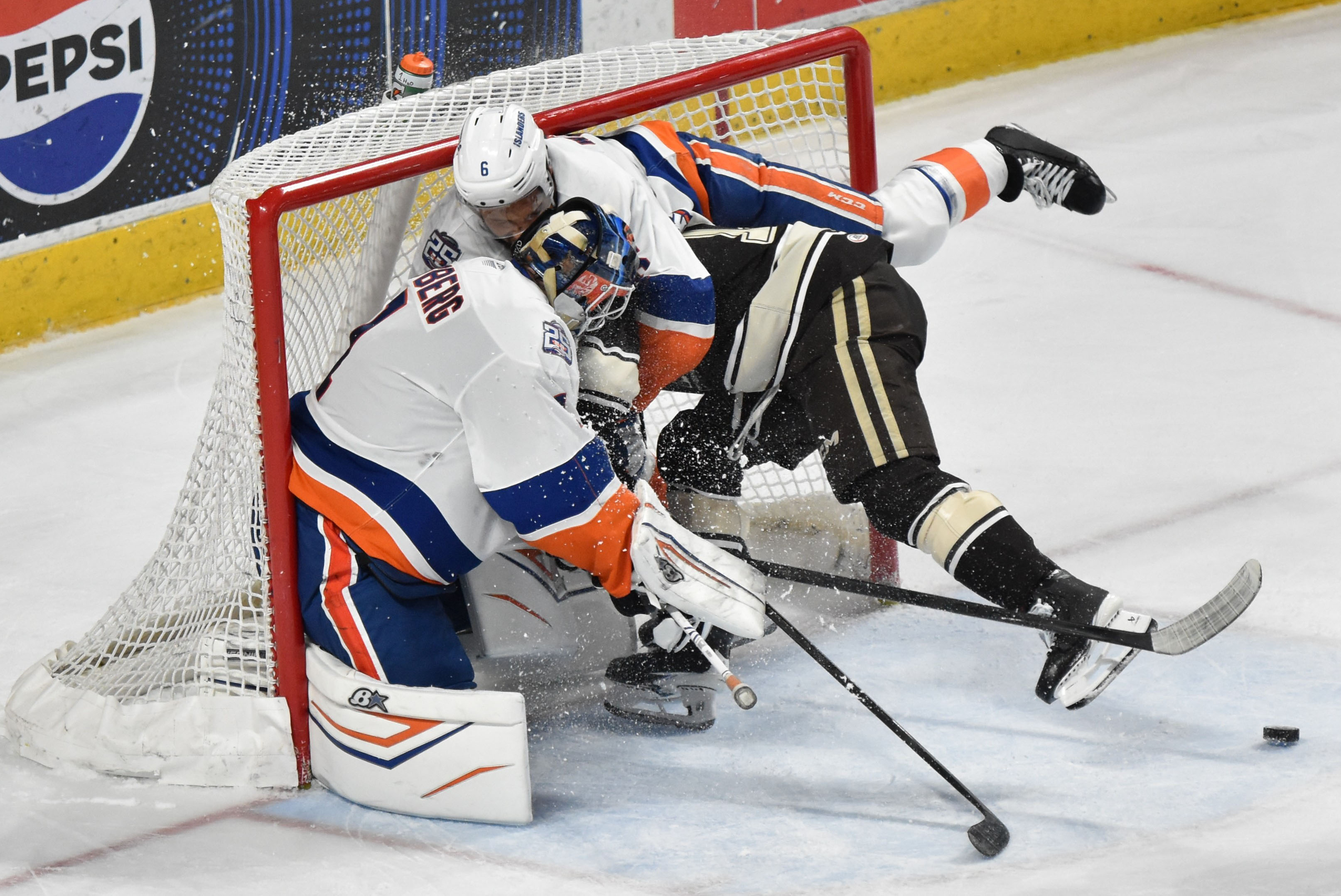
On Thursday, April 23, 2026, in the 1st Round of the Calder Cup Playoffs between the Hershey Bears and Bridgeport Islanders. The Bears won by a score of 5-2 Photo by Steve Rusyn
The Skater’s Interval Problem
A skater’s fluid loss comes from a different engine. Forwards and defensemen work in short, maximal bursts, then leave the ice to recover, and that pattern repeats across a full game. The bursts drive a high sweat rate through hard cardio work rather than trapped heat, and the total loss climbs with every turn on the ice. During games, skaters tend to lose more fluid than goalies precisely because they are moving at speed for most of their time on the surface.
The recovery pattern also gives skaters something goalies lack. A forward comes off the ice every minute or so and sits on the bench with a bottle in reach. The chances to drink are frequent, even if players rarely take full advantage of them.
Putting Sodium Back on the Bench
Replacing what hockey takes means covering both the fluid and the sodium, since players lose roughly 920 milligrams of sodium for every 32 ounces of sweat. Water alone leaves the sodium gap open, so sports drinks and hydration drinks with added electrolytes become the way to put salt back along with the fluid. The right amount depends on the volume and the saltiness of each player’s sweat.
The choice is not the same for every player on the roster. A goalie soaked in trapped heat and a defenseman who logs heavy minutes have different totals to replace, and matching the drink to the person beats handing the whole bench one bottle and one assumption.
Two Different Hydration Windows
The biggest practical split between the two roles is timing. A skater refuels in pieces, a few swallows every time they hit the bench, spread across dozens of trips over three periods. Their plan can lean on those frequent breaks, as long as they drink on schedule, since hockey players sweat far more than the cold rink suggests and rarely feel the loss in time.
A goalie has almost no such breaks. Outside of whistles, television timeouts, and intermissions, a goalie stays in the crease while the heat keeps building. That means a goalie’s plan has to be more front-loaded and more deliberate, taking real amounts of fluid at every stoppage rather than relying on bench trips that never come. The same passive approach that half works for a skater can leave a goalie deep in a deficit by the third period.
The Focus Cost for Goalies
Dehydration hits the goalie position where it can least afford it. Losing fluids slows reaction and dulls the sharpness that goaltending is built on, and a goalie who is a fraction slow to track a puck or read a screen pays for it in goals. A tired forward can be covered by a line change. A dehydrated goalie stays on the ice and carries the deficit into every shot faced.
This is why the goalie’s plan deserves its own attention rather than a share of the skaters’ routine. A goalie fighting a fluid deficit loses the focus at the exact moments a game demands the most of it. The heat load is higher, the breaks are fewer, and the cost of a slow reaction is greater. Three factors push in the same direction, and all three point to a goalie needing more deliberate fluid intake than the players in front of them.

Two Jobs, Two Plans
Goalies and skaters do different physical work and lose fluid in different ways, so a plan built for one will misfire for the other. A skater sweats through bursts of speed and drinks in frequent snatches on the bench. A goalie sweats under trapped equipment heat and has to plan around long stretches with no break at all. Treating the two the same is how a team keeps its forwards topped up while its last line of defense quietly runs dry. The fix is two plans built around two different jobs, matched to how each position actually loses water across 60 minutes on the ice.
