
Professional hockey players who took education seriously often become the smartest guys in the locker room. Some completed university degrees while playing junior hockey. Others took courses during off-seasons. A few even went back for graduate degrees after hanging up their skates.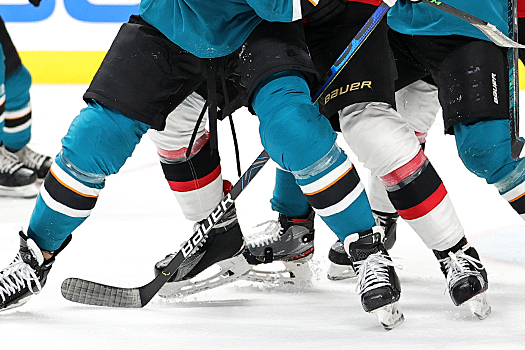
Education doesn’t hurt your hockey career – it often helps. Players who stayed in school learn to process information faster, understand systems better, and communicate more effectively. Those skills matter just as much on ice as in life after hockey.
College Hockey Scholarships and Academic Standards
NCAA Division I programs offer college hockey scholarships that cover tuition, room, and board. But these scholarships come with strings attached – you need to maintain minimum GPAs and make progress toward a degree. Drop below academic standards and you lose eligibility.
Harvard, Princeton, and other Ivy League schools don’t give athletic scholarships at all. Players choose these programs specifically for the education, not the money. Jimmy Vesey and Alex Killorn both went to Harvard knowing they’d pay full tuition while developing their game. That choice paid off – both made the NHL and graduated with Harvard degrees.

Managing Hockey with Study
Student-athletes track stats, watch game film, and complete academic projects all at once. Hockey practice runs 2-3 hours daily. Add travel for road games, strength training, and actual classes. The schedule gets overwhelming fast.
Staying on top of everything academically becomes its own challenge. Managing everything requires serious organization. People working on research papers often use plagiarism checker tools to verify that their work meets standards before turning it in. This ensures proper citations and source attribution. Academic integrity matters in college athletics where maintaining eligibility depends on legitimate work. Getting the verification right supports both athletic and academic success. It builds trust with coaches and instructors. Strong habits lead to long-term eligibility and career readiness.
These organizational habits stick around after college. Pro players who learned to balance everything in school handle the NHL grind better than guys who never developed those skills.
The High School Hockey Schedule Reality
Most elite hockey players face a tough choice in high school. The high school hockey schedule conflicts with AAA travel hockey, which scouts actually watch. Many players skip high school teams entirely to play AAA, where college hockey scholarships get awarded based on performance.
This creates academic challenges. Players miss school for tournaments, training camps, and showcases. Some switch to online programs or alternative schools that accommodate travel schedules. Others try to balance regular high school with heavy hockey commitments.
Players who navigate this successfully often have strong family support and genuine interest in education. The ones who view school as just something to endure usually struggle academically.
What Hockey Players Study
Eddie Olczyk studied communications at Northern Michigan before his long broadcasting career. Ray Ferraro’s communication training helped him transition from player to analyst. Explaining complex hockey to casual fans requires both playing experience and communication education.
The best analysts combine hockey knowledge with presentation skills developed through academic training. Playing experience gets you in the door. Communication skills keep you employed.
Business Backgrounds Open Doors
Jonathan Cheechoo earned his business degree from St. Cloud State. Ryan Miller studied marketing at Michigan State. These backgrounds helped them make smart decisions about endorsements, investments, and business ventures during and after their careers.
Players with business education understand contract negotiations better too. They grasp salary cap mechanics, revenue sharing, and franchise economics. This knowledge helps during contract talks and union involvement.
Players Who Actually Earned Real Degrees
Craig Adams got his engineering degree from Harvard while playing hockey. Later won two Stanley Cups with Pittsburgh. Adams says his engineering background helped him break down systems and solve problems on ice.
Ken Dryden, according to a report from Cornell University Athletics, played goal at Cornell and earned his degree before joining Montreal. Then he added a law degree from McGill while still playing professionally. After retiring, Dryden became a lawyer, author, and eventually entered politics. His education opened doors hockey alone wouldn’t have.
Kevin Weekes studied business while playing and used those skills to transition into broadcasting after retirement. His communication training made the career change smoother than most players experience.
The Importance of Education for Athletes
Hockey careers end in your 30s. That leaves 40+ years for whatever comes next. Education provides options beyond coaching or broadcasting. Former players work as doctors, lawyers, executives, and entrepreneurs using degrees earned during or after playing careers.
Brendan Shanahan completed his degree after retiring and applied his education to front office roles. He’s now president of the Toronto Maple Leafs, where his combination of playing experience and business education made him effective in leadership.
Education also changes how you see the game while playing. Reading extensively and studying diverse subjects often enhances hockey IQ. Understanding patterns, anticipating outcomes, and processing information quickly all benefit from strong educational foundations.
Post-Playing Education
A lot of players go back to school when they retire. They finish degrees that were put on hold or start new ones. You retire in your 30s, which gives you decades to start a second career that often needs more schooling.
Some people go on to get advanced degrees, such a medical degree, a law degree, or an MBA. They do well in hard programs because hockey taught them discipline and how to compete. Former athletes generally do well in school after they stop playing because they have already shown that they can handle stress and stick to long-term goals.
Conclusion
The smartest hockey players make sure to get an education while they play. These athletes know that getting an education helps them both on and off the ice, whether they do it while they are still playing or after they retire. People who do well in school and in sports are well-rounded and ready for life after hockey. The combination is more important than either part on its own.
You must be logged in to post a comment.