
Ice hockey is one of the fastest and most dynamic sports in the world. While the speed, physicality, and intensity of NHL games can be thrilling to watch, the game can be confusing for newcomers. Just as learning a game like the Tongits card game sa Pilipinas requires understanding its rules and strategies, appreciating hockey means knowing player positions, their roles, and their responsibilities on the ice. This guide breaks down the six main positions in ice hockey, special teams, and key on-ice responsibilities for beginners.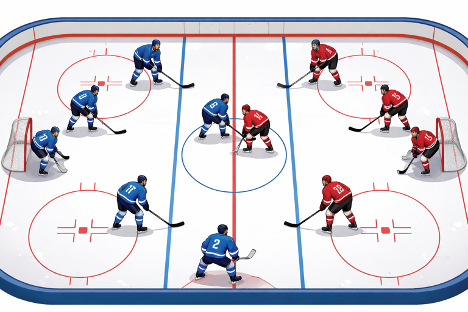
Understanding the Basics: The Layout of the Ice
A hockey rink in the NHL stretches 200 feet by 85 feet, holding a goal on each side. One goaltender guards each team’s net, backed by two defenders and three forwards skating full ice. Movement never stops—players shift positions fast, switching between stopping goals and trying to score them. While forwards push ahead, defensemen cover space behind, both adapting without pause. Because roles blur so quickly, someone watching for the first time might feel lost. Still, every player stays involved, always chasing control of the puck.
Start by learning where players stand—that shapes when they move, why they shift, and what happens next. Watch closely; see patterns form before passes even begin. Positions reveal timing, spacing, and who might break open. See the court differently once you notice these details.

Forward Positions: Center and Wingers
Center
Nowhere else on the ice does a player handle so many roles at once like the center. Moving through the neutral zone, they set the tempo while keeping an eye on opposing shifts. When play turns defensive, backchecking becomes key, yet transition speed still matters just as much. Vision separates good ones from average—spotting lanes before passes open up. Supporting wingers isn’t just about passing; timing cuts and drawing defenders creates space. Faceoffs? That daily test of strength and reaction shapes puck possession early. Linking defense to offense happens in split seconds, rarely noticed unless missed. Quick decisions under pressure define how well the whole unit flows.
Wingers: Left and Right
Out near the edges, wingers push forward to create scoring chances by spreading the other team thin. On the left flank, that player sticks to the left half of the surface; their partner does the same on the right. Scoring matters a lot for both roles, along with keeping constant pressure and linking up with the centerman. When play flips suddenly, they’re meant to retreat quickly, backing up defenders when danger strikes close to home.
Focused up front, they create opportunities to score by keeping control of the puck while pushing deep into enemy territory. Pressure builds when they stay active near the net, forcing defenders to react quickly. Possession matters most when transitions happen smoothly between them, cutting down mistakes. Their movement opens space, making it harder for opponents to settle. With constant motion, scoring threats emerge naturally through persistence. Success comes not just from shots but from smart positioning over time.
Defensemen: Protecting the Blue Line
Standing between the attacker and the net, defensemen guard their goalie fiercely. Most teams rely on a pair—one patrols the left, one takes the right. Shutting down attacks comes first: they block pucks, disrupt routes, and pressure carriers. After gaining control, they spark movement forward, either sending crisp passes or skating through neutral ground. A solid back line keeps everything calm behind the scenes.
Offense now pulls defensemen into play—seen most when teams gain advantage through penalties or fast breaks. Moving well on ice matters, along with knowing where others are before decisions unfold. Gaps form easily if focus slips even briefly.
Goaltender: The Last Line of Defense
Standing guard at the net, the goaltender’s job is clear—keep the puck out. From their spot by the crease, they watch every move, ready to shift fast when a shot comes. Instead of waiting, they guess where the puck might go before it’s even released. Each save builds pressure on the opposing team, slowly changing how the game unfolds. Over time, those sharp reflexes add up, making one player pivotal without needing the spotlight.
From behind the mask, goalies shout instructions, shaping how defenders move near the crease while calling out where attackers are. Watching their shifts and slides reveals just how sharp and exact this job really is.
Special Teams: Power Plays and Penalty Kills
When someone breaks a rule, the game shifts into different group setups. One squad gains extra players if their rival gets penalized. That moment—called a power surge—lets teammates push forward in tight patterns aiming at the goal. While that happens, some stay back to block countermoves. On the flip side, playing short means hanging tough with fewer skaters, trying hard not to let goals slip through. Everyone knows where they need to be, how fast to move, and who takes charge. Smooth teamwork keeps things steady under pressure. Tough choices come fast, yet calm heads make it work.
On-Ice Communication and Awareness
Faster than most realize, hockey unfolds moment by moment. A shout, a raised glove, a glance—these guide movement across ice. Knowing who stands where shapes how well a group moves together. New players notice patterns simply by watching closely. Learning happens just by staying alert during play.
Common Mistakes New Fans Make
When things speed up, new viewers often find it hard to track where players are on the ice. A forward might slide into the middle when charging toward the net, while someone from the back line sneaks forward into attack mode. Spotting those switches makes it easier to understand what happens next. People also tend to overlook how much the goalie controls the flow—shifting position, cutting down space, and staying ready. Those split-second choices can flip who’s in charge of the match.
Final Thoughts
Most folks get more out of hockey once they grasp who does what on the rink. When you see how players connect during rushes or defensive stands, the pace makes sense. Centers set up attacks while defensemen break up theirs—each role shapes flow differently. A goalie’s last-second save can shift momentum just as much as a winger’s clean breakout pass. Watching becomes richer when moves link to meaning instead of looking random.
Start seeing hockey differently once you grasp the basics. Watch how players stand, shift, and talk—those details pull the whole picture together.
