
By February, the NHL season feels far removed from October. The standings are settled, injuries have tested depth, and coaching strategies are no longer a mystery. With the Olympic break approaching and the playoff push ahead, true contenders begin to separate themselves.
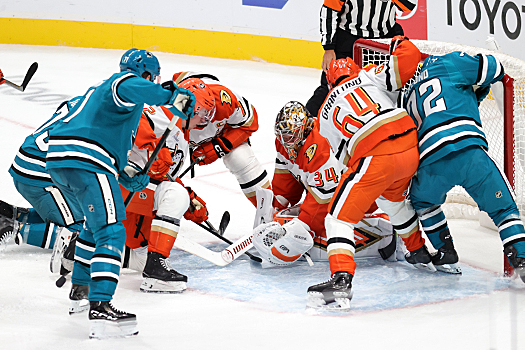
Ducks goalie Petr Mrazek (34) reaches to cover the puck in traffic – Photo by Jack Lima
Some teams fade as the grind sets in, while others find a rhythm that holds. The separation is rarely about one element alone, but rather a blend of roster balance, structure, and reliability that distinguishes Stanley Cup contenders from teams simply collecting points.
Elite Core Players Matter, but Depth Decides Everything
Every true contender has a foundation of elite talent. Star players generate offense, swing tight games, and provide confidence late, especially as midseason matchups begin to mirror playoff intensity and reveal who can still create under pressure.
Depth keeps teams steady over an 82-game season. True contenders don’t rely on one line or pairing, instead drawing consistent contributions throughout the lineup to withstand injuries and fatigue.

Well-balanced teams usually share a few traits:
- Consistent production beyond the top line,
- Defensemen who can handle minutes without being sheltered,
- Younger players trusted in real roles, not just spot duty.
That balance becomes increasingly important as the calendar turns and the margin for error shrinks.
Defense and Goal Differential Separate Contenders
Strong defensive habits tend to appear long before playoff hockey begins. Midseason contenders play with structure, limit breakdowns, and force opponents into low-percentage chances. The best teams rarely look rushed in their own zone, even when subjected to sustained pressure.
Goal differential offers one of the clearest snapshots of that consistency. Teams that steadily outscore opponents at five-on-five are usually controlling games rather than chasing them, a sign their approach holds up over time.
Fans track that broader picture through the standings and Stanley Cup winner odds, which shift as teams demonstrate they can sustain those advantages across the season.
Consistent Goaltending Changes How Contenders Compete
Reliable goaltending gives teams freedom. When coaches trust the last line of defense, systems open up. Defensemen activate more confidently. Forechecks become more aggressive.
Midseason, the gap between stable goaltending and streaky results becomes obvious as schedules tighten and games grow heavier. Contenders don’t need perfection every night, but they do need predictability when margins narrow, and pressure builds.
Just as important is mental resilience in high-pressure moments. The goaltenders who handle pressure, bounce back quickly, and stay composed through rough stretches often define how far a team can realistically go as the season tightens.
Midseason Trends Shaping the 2025–26 Stanley Cup Picture
As the season matures, league-wide patterns are sharpening. Shot quality has overtaken shot volume, with teams attacking the interior and generating high-danger chances enjoying more sustainable success than those relying on perimeter looks.
Aggressive forechecking has reemerged as a key separator, allowing teams to disrupt breakouts and control play. At the same time, younger players are taking on meaningful roles earlier, reflecting the league’s increasing commitment to speed and pace.
For fans following these shifts closely, resources covering the latest NHL news and trends help frame how the Stanley Cup picture evolves week by week.
The Defining Test of the Stanley Cup Race
As the schedule tightens, contender status will be confirmed in familiar ways. How teams perform against fellow elites matters. Road results matter. The ability to win low-scoring games matters most of all.
By spring, the teams still standing near the top won’t just have strong records. They’ll have proven they can sustain their identity under pressure. That staying power is what ultimately defines a true Stanley Cup contender.
You must be logged in to post a comment.