How Gambling Regulation Impacts Hockey Communities in New Zealand

Online betting and digital gaming have become part of the wider sports ecosystem around the world. From major leagues to local competitions, fans now follow matches with a second screen in hand — checking stats, fantasy lineups, and sometimes placing small wagers. Because of this shift, governments and sports bodies are paying closer attention to how gambling is regulated and how it affects communities connected to sport.

In New Zealand, where ice hockey remains a growing but tight-knit sport, the conversation is less about commercial deals and more about community protection, responsible behavior, and maintaining trust in competition.

Gambling and Sport: Why Regulation Matters

The link between sport and gambling is not new, but digital platforms have made participation faster and more accessible than ever. That accessibility brings both engagement and risk.

Sports regulators around the world focus on several core concerns:

  • Protecting young fans from early exposure to gambling-style products
  • Reducing problem gambling, particularly among vulnerable groups
  • Maintaining integrity in sport, including preventing match manipulation
  • Controlling advertising, so promotions do not overwhelm sports audiences

For smaller sports markets, these issues can have a bigger impact. Community sports often rely on volunteers, families, and junior development programs. Any harm linked to gambling can quickly ripple through these networks.

The Regulatory Environment in New Zealand

New Zealand is known for having a comparatively strict and structured approach to gambling. The system combines government oversight with limits on how and where gambling can be promoted.

Key features of the local environment include:

  • Tight control over who can legally offer gambling services
  • Clear rules around advertising and sponsorship visibility
  • Ongoing public consultation when laws or policies are reviewed
  • Strong emphasis on harm minimisation and consumer protection

Unlike some countries where betting logos dominate team jerseys and stadium signage, New Zealand sport tends to keep a noticeable distance between community teams and gambling branding. This shapes how sports organizations approach the topic — not as a commercial opportunity first, but as a public responsibility issue.

How Sports Organizations View Gambling Policy

National and regional sports bodies often take part in discussions about gambling policy, especially when it comes to advertising and youth exposure.

Organizations such as Ice Hockey New Zealand represent clubs, players, and development programs across the country. Their focus is primarily on:

  • Keeping sport accessible and family-friendly
  • Protecting junior players and young fans
  • Preserving trust in fair competition

For these organizations, regulation is not just a legal matter — it’s about the long-term health of the sport. Even when gambling is legal, the way it is presented to audiences matters. Sports leaders typically support policies that limit aggressive promotion and encourage responsible use.

Hockey in New Zealand: Community Before Commerce

Ice hockey in New Zealand is still a developing sport compared to rugby or cricket, but it has a dedicated following and a strong grassroots base.

The New Zealand Ice Hockey League (NZIHL) is the country’s top domestic competition. While the league is competitive, it remains closely connected to local communities. Many players, coaches, and supporters are directly involved in youth programs and club development.

Because of this structure, the sport depends heavily on:

  • Family participation
  • Volunteer support
  • Safe, inclusive environments at rinks and events

In this context, gambling regulation is seen less as a restriction and more as a safeguard. Keeping the sport’s image focused on skill, teamwork, and community helps ensure it continues to grow in a healthy way.

The Fan Perspective: Entertainment vs Responsibility

Modern sports fans often multitask. While watching a game, they may browse social media, follow live stats, or explore different forms of online entertainment. Not all of this is high-stakes or high-risk.

A noticeable trend globally is the move toward low-commitment digital activities. Many adults prefer platforms where spending is limited and clearly controlled rather than services that require large deposits upfront. This is where discussions about moderation become practical, not just theoretical.

For example, some users specifically look for options that allow very small starting amounts — formats often described in guides to $2 deposit casino nz platforms — because they want entertainment without significant financial exposure. From a regulatory perspective, this kind of behavior highlights why clear rules, spending limits, and transparency are important. The issue is not only whether gambling exists, but how safely and responsibly it is structured.

Why Balanced Regulation Benefits Sports Communities

Well-designed gambling regulation aims to create balance rather than impose blanket bans. For sports communities, the benefits are tangible:

  • Reduced social harm, which protects families involved in sport
  • Stronger integrity systems, helping maintain trust in results
  • Clearer boundaries for advertising, so sport is not overshadowed by promotions
  • Greater public confidence in how sport and gaming industries interact

When rules are clear, both fans and organizations understand the limits. That stability helps smaller sports like ice hockey grow without being pulled into controversies that could damage their reputation.

Protecting the Spirit of the Game

Ice hockey in New Zealand is built on community effort, local pride, and steady development. As digital entertainment continues to evolve, regulation plays an important role in making sure that new trends do not undermine those foundations.

The goal is not to remove enjoyment or restrict adult choice, but to ensure that sport remains a positive space — especially for younger generations. By keeping a careful balance between entertainment and responsibility, New Zealand’s approach helps protect both the integrity of competition and the wellbeing of the communities that support it.

GB to host Olympic Qualifiers in Cardiff

Great Britain will host the third round of qualifying for the 2026 Winter Olympics in Cardiff. The event will run from 8-11 February 2024.

“The decision to organise Olympic Qualifiers was taken after our fixtures meeting by the IIHF and IOC. Ice Hockey UK kept us informed of developments, and we will, of course, be releasing players called into the national team for the entire week of competition,” explained EIHL Chairman Tony Smith.

“The league’s ten teams agreed, however, that they will need to play through as planned on these dates. Players called into the national team will be unavailable for EIHL games during that week.”

Great Britain will come up against Romania, China and a qualifier from the previous round. The group winners will progress to Final Qualifying in August 2024 for the 2026 Winter Olympics in Italy.

It’s the second time in four years that the UK has held this stage of the Olympic Qualifiers, with Nottingham’s Motorpoint Arena hosting the tournament in February 2020.

Ice Hockey UK CEO, Henry Staelens, said: “It’s going to be a special event and great to be taking GB Men’s competitive hockey to Cardiff, who have been really good to work with during our conversations with them.

“I’m sure the fans will pack the place out and create a brilliant atmosphere as we aim to progress to the next round.”

Cardiff Devils MD, Todd Kelman, said: “We are pleased to be able to host such a prestigious event.

“We look forward to working with Ice Hockey UK to bring this tournament to Vindico Arena and hopefully have plenty of fans cheering on GB.”

Photo: James Assinder

GB promoted after unbeaten tournament!

Great Britain secured an immediate return to the top flight of world ice hockey with a 5-3 victory over Italy at the Motorpoint Arena in Nottingham on Friday evening, completing an unbeaten record at the 2023 division 1A championships.

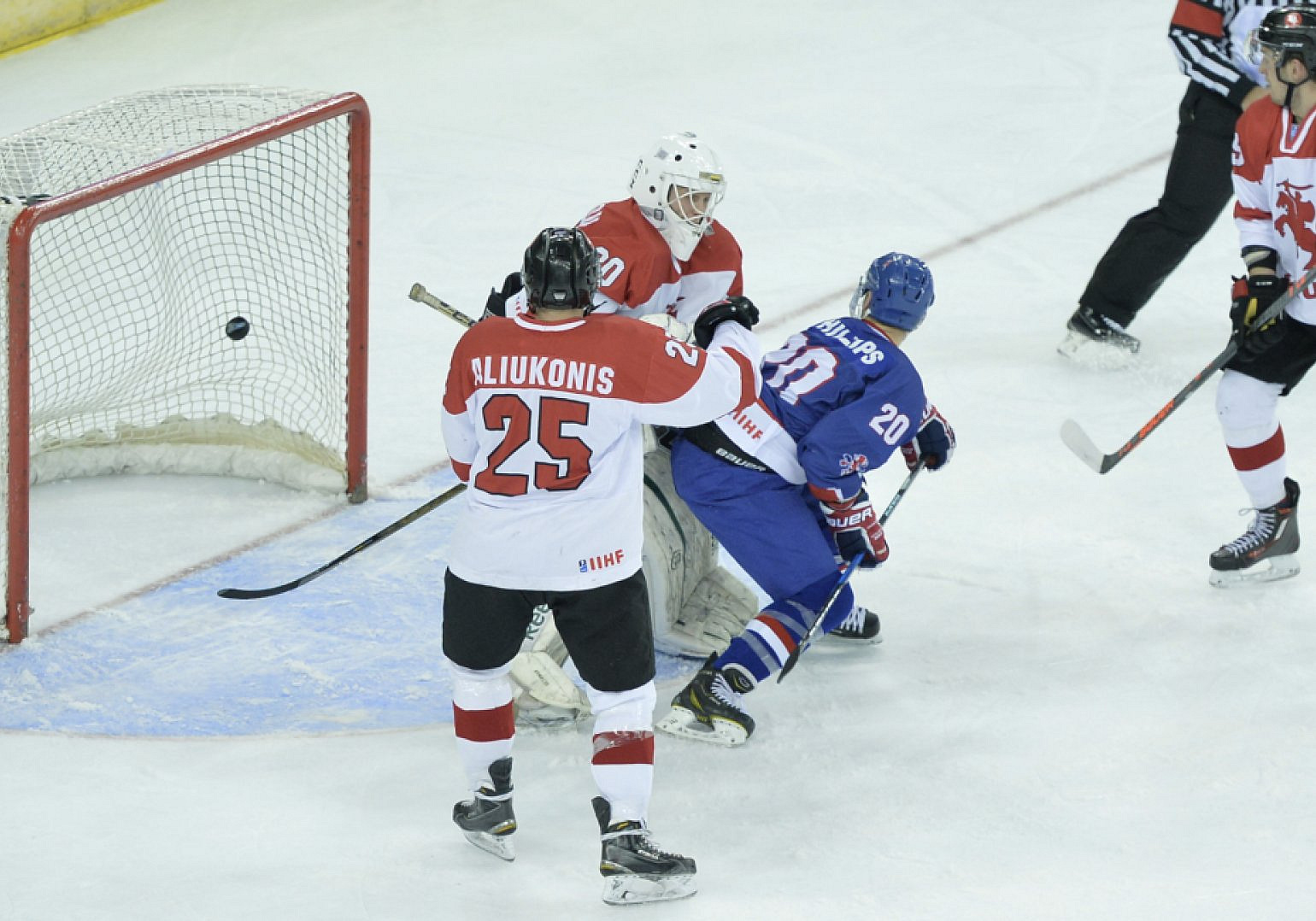
Italy had to beat GB in regulation to secure promotion after Poland booked their place in the top two earlier in the day. The host nation got off to the perfect start when Mike Hammond perfectly found Brett Perlini at the far post for a tap-in to put GB ahead on the powerplay at 5:40. Italy levelled with a Thomas Larkin shot that deflected off Jonathan Phillips’ stick and past Ben Bowns at 11:21 on a delayed penalty.

59 seconds into period two, Cade Neilson fired past Justin Fazio to put GB back ahead, but Alex Petan’s finish on the fall that crept through Bowns tied things up again at 24:34. Ollie Betteridge’s excellent effort to keep the puck alive in the attacking zone set up Mike Hammond for a neat finish at 28:43 for a 3-2 GB lead, but a wonderful passing play from Faniel Mantenuto and Luca Frigo set up Daniel Glira for the equaliser at 34:29.

Another Hammond to Perlini put GB back ahead on a delayed penalty with 4:03 left in period two.

Period three was noticeably more tense and tight than the two that had gone before it, but Italy needed two goals for promotion and time was ticking away. After the final power break of the period, Italy pulled Fazio but a defensive zone turnover allowed Liam Kirk to set up Neilson for the empty net goal which sealed the win and promotion with 2:10 to play.

Captain Jonathan Phillips was honoured in the post-game ceremonies for his final appearance for Great Britain.

Photo: Dean Woolley

Friday: GB a point from promotion

Great Britain will be promoted straight back to the top level of world ice hockey if they can pick up at least a point in Friday’s showdown game with Italy at the Motorpoint Arena.

With four wins from as many games played so far, Pete Russell’s team go into the final day on top of IIHF World Championships Division 1A. Games earlier in the day could have an effect on what needs to happen in the final game, but a point will guarantee GB a place in the Elite Group in 2024. Poland could secure promotion earlier in the day, while Italy will need a regulation win to advance as things currently stand.

The game is live on Viaplay Xtra with faceoff at 7.30pm.

Photo: Dean Woolley

GB with fate in own hands after third win

A third straight win at the 2023 IIHF World Championships took Great Britain to the top of Divison 1A with two games left to play.

A surprise result earlier in the day where Poland beat Italy knocked the pre-tournament favourites off top spot, leaving them with work to do in their final pair of matches.

GB came through against an always tricky Lithuania side with a 3-0 win on Tuesday night, the damage mainly being done in the first period as Cade Neilson fired in from the slot off a turnover inside two minutes. Liam Kirk’s perfect pass to Robert Dowd set up his former Steelers teammate to double the lead shortly before the break.

A Nathanael Halbert empty-netter sealed the win in the third after some sustained Lithuanian pressure in the final 10 minutes.

Great Britain face Romania on Wednesday at 7.30pm, although in Tuesday’s post-game comments several members of the team noted they’ll need to play better in their final two games to achieve promotion.

Should GB beat Romania, they would go into the final day’s action on top and any result other than a regulation defeat to Italy would be enough to get promoted. Results in other games before then may, of course, change the maths before Friday evening.

Photo: Dean Woolley

Tuesday: GB face Lithuania

Great Britain’s third game of their home IIHF world Championships Division 1A campaign sees them face Lithuania on Tuesday evening at the Motorpoint Arena in Nottingham.

After two wins and a rest day, Pete Russell\s team face the group’s joint-basement side as they look to keep their hopes of promotion firmly in their own hands. Lithuania have lost both of their games so far, having scored only two goals and conceded 10.

Lithuania have proved to be tricky opponents for GB across a number of years. They won both friendlies in the run-up to the 2018 World Championships where GB won promotion to the elite group, and while in competitive meetings GB have won the last two, long-term fans will remember the 3-2 defeat in 2015 which cost GB promotion to Division 1A.

Earlier in the day, leaders Italy will face third-placed Poland. The result of that game could go a long way to determining what Great Britain need to achieve in their remaining fixtures to secure promotion.

You can follow the game live on Viaplay Xtra with Aaron Murphy and former GB player Paul Adey, with faceoff at 7.30pm. Viaplay Xtra is available on Sky channel 420 and Virgin 553.